
Last year, my MA course attended an event in Canterbury where we got to hear Essie Fox talk about her latest work, “The Last Days of Leda Grey”. Unlike her three previous books (which I’m still to read), “Leda Grey” is Edwardian rather than Victorian, and its premise intrigued me enough that I had to give it a try.
I was not disappointed.
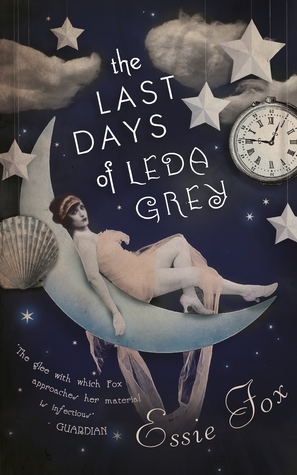
Image © the cover artist / publisher.
The protagonist is Ed Peters, a journalist from London who has become disillusioned with his work. While in the seaside town of Brightland during the heatwave of 1976, he comes across a photograph of an actress from early black-and-white films called Leda Grey. Upon discovering that Leda is still alive but a recluse in the cliff-top house where once she made movies with a director called Charles Beauvois, Ed decides to visit her so he can write a book about her and early films. However, there is a reason that Leda hasn’t left the house in over fifty years, and there are some secrets that shouldn’t be uncovered.
Elements of the overall plot reminded me in some ways of “Wise Children” by Angela Carter. While a good chunk of the book is narrated first person by Ed, there are also parts narrated by Leda herself through her memoirs or “Mirrors”.

Image © jurii.
Thus you have a story in which an elderly veteran of the entertainment industry is telling her life story in the same way Dora Chance does and that also includes elements of magic-realism.
However, this is where the comparisons break down. Dora is likeable but also brash and vulgar, with her story broadly a comedy where the unrealistic elements tend to be farcical or enchanting. Conversely, Leda is a far more fragile and elegant presence, her story is more of a mystery, and the mystical elements of her eerie twilight world are far more unnerving – and in some places, grotesque – than magical. For example, the very first time Ed lays eyes on the photograph of Leda, something makes him perceive her face as a skull for a few brief moments. And things only get more unnerving from there!
Image © ronymichaud.
It’s hard to say more about the book without giving away elements of the plot and I am loath to do that because it is a beautiful piece of work that should be widely read. Ed is realistically human and you feel the way he is as a restless young man unsure of what to do, and Leda is such a beautifully complex character – part Dora Chance, part Miss Havisham and part something entirely new. The plot and the tension build deliciously, slowly revealing and setting up a climax that feels as inevitable as it does exciting and surprising.
I read this book on the train home from uni and when I got to the final chapter, I had to stop in Stratford International Station to finish it because I couldn’t wait until I caught my next train. That’s how good it is. Definitely give this one a try.
~ Penny
Related Post: The Thursday Review: “Heart of Darkness” by Joseph Conrad
Want to get in touch? E-mail me (pennygotch@gmail.com), message me on Facebook, send me a tweet (@pennygotch) or leave a comment!
Available Books
Solo: Under the Tree / Dark Heart / Write Nothing
Collab: Personal is Political

Images © Penny Gotch (http://www.pennygotch.co.uk), Liam Whear, Susan Wright and Molly Penford.
 P. Gotch – Writer

Pingback: The Thursday Review: “Disgrace” by J.M. Coetzee | Penny Gotch – Writer